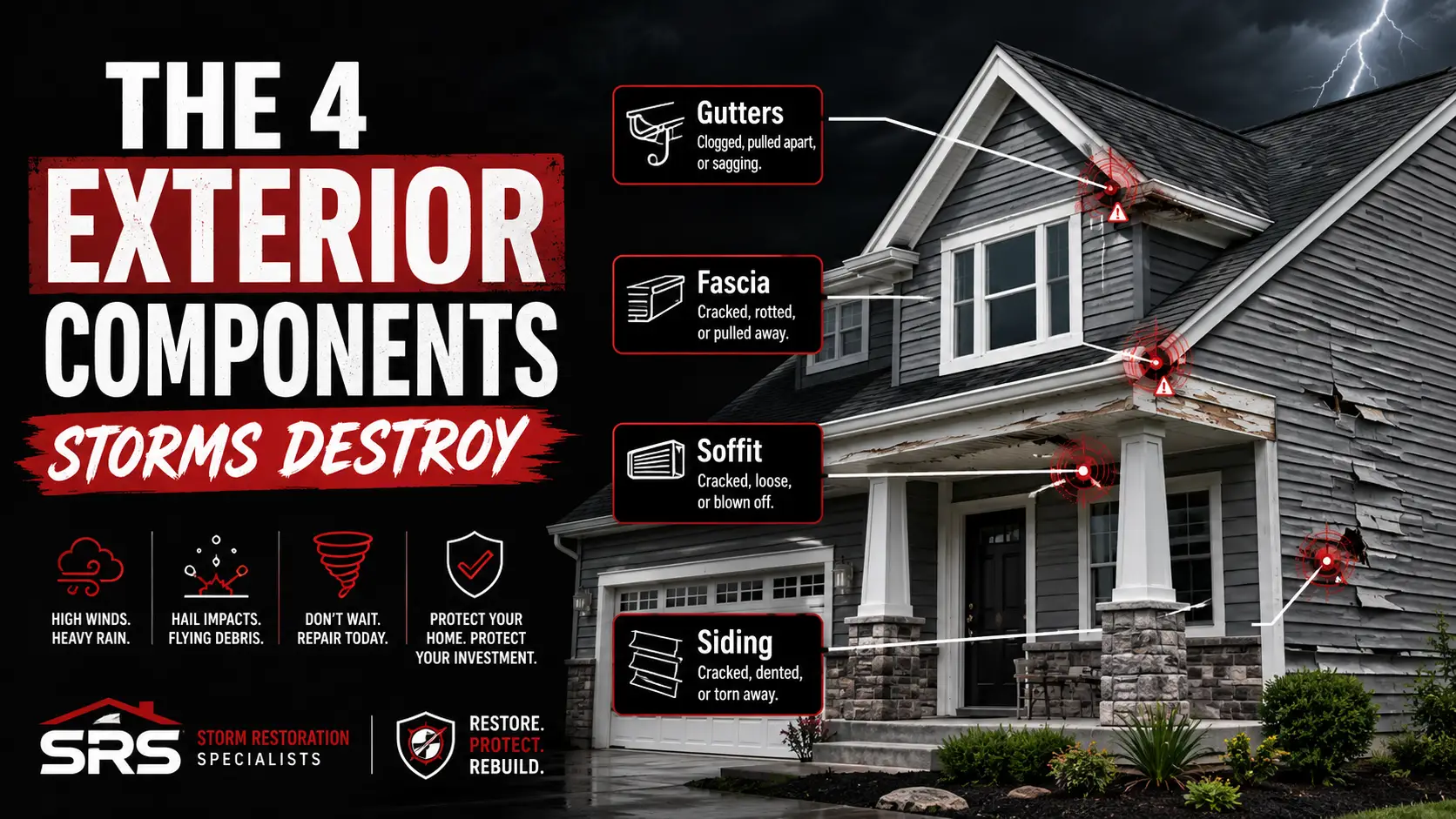
After a windstorm, every homeowner looks up at their roof. But the components that protect the rest of your home, the gutters that direct water, the siding that shields your walls, the fascia that seals your roof edge, and the soffit that ventilates your attic, are just as critical and far more likely to be ignored. Storm damage to these four exterior components creates a cascade of secondary problems that can cost thousands of dollars if left unaddressed. Understanding what each component does, how storms damage it, and why repair is urgent will help you protect your home and maximize your insurance coverage.
Gutters: Your Home’s First Line of Water Defense
Gutters serve one essential purpose: directing rainwater away from your home’s foundation, walls, and landscaping. When gutters are functioning properly, water flows from your roof into the gutter channels, through the downspouts, and away from the foundation. When storm damage compromises this system, the consequences are severe and fast-moving.
How Storms Damage Gutters
High winds pull gutters away from the fascia board, breaking the screws and hangers that hold them in place. Hail dents aluminum gutters, creating low spots where water pools instead of flowing to the downspouts. Falling branches bend or crush gutter sections entirely. Heavy rain combined with debris creates blockages that cause overflow, sending water cascading down your exterior walls and pooling around your foundation. Even a single section of detached or dented gutter can redirect hundreds of gallons of water into areas that were never designed to handle it.
What Happens When Gutter Damage Goes Unfixed
Water that should be directed away from your home instead saturates the soil around your foundation, creating hydrostatic pressure that can cause basement leaks and foundation cracks. Overflowing water stains and damages exterior walls. Pooling water near the foundation promotes mold growth and attracts insects. In winter, improperly draining gutters create ice dams that cause even more roof and interior damage.
Siding: The Shield That Protects Your Walls
Your siding is the protective skin of your home. It keeps moisture, wind, pests, and temperature extremes away from the structural framing and insulation behind it. When siding is intact, your home stays dry, insulated, and protected. When it is compromised, every rainstorm becomes a potential disaster.
How Storms Damage Siding
Wind is the primary threat to siding. High winds create pressure differentials that push and pull siding panels, loosening them from their mounting tracks. Once a single panel lifts, wind gets behind it and peels adjacent panels away in a chain reaction. Hail cracks and punctures vinyl siding on impact. Flying debris, from branches to unsecured outdoor items, can shatter or dent panels. Even without visible holes, the stress of repeated high-wind events weakens siding fasteners over time, making panels increasingly vulnerable to the next storm.
The Hidden Danger: Water Behind the Siding
When siding panels are cracked, lifted, or missing, water penetrates behind them and reaches the house wrap and sheathing underneath. Once moisture is behind your siding, it has no way to dry out. Within weeks, mold begins growing on the sheathing and framing. Wood rot follows. Insulation becomes saturated and loses its effectiveness. By the time you notice anything inside the house, the structural damage behind the siding can be extensive and expensive to repair. For more about how hail specifically damages siding and other components, see our guide on what to do after hail hits your home.
Fascia: The Unsung Hero of Your Roof Edge
Fascia is the long, straight board that runs along the lower edge of your roof, mounted directly to the ends of your roof trusses or rafters. Most people never think about fascia because it is hidden behind the gutters. But fascia performs two critical functions: it supports the entire gutter system and seals the gap between the roof edge and the exterior wall, preventing water, pests, and weather from entering your attic space.
Storm Damage to Fascia
When wind pulls gutters away from the house, it often damages the fascia board behind them. Screws and hangers tear out of the wood, leaving holes. Water that overflows damaged gutters soaks the fascia, causing wood rot, especially in older homes where fascia is made of untreated lumber. Hail can dent aluminum fascia cladding or crack wood fascia, exposing the underlying material to moisture. Once fascia is compromised, your gutters cannot be properly reattached, creating a chain of failure that affects the entire water management system of your roof.
Soffit: The Ventilation System You Cannot See
Soffit panels are installed on the underside of your roof overhang, the area between the exterior wall and the roof edge. They serve a dual purpose: protecting the underside of the roof structure from weather exposure and providing ventilation to your attic through small perforations or vents built into the panels.
Why Soffit Damage Creates Serious Problems
When wind or debris damages soffit panels, two things happen simultaneously. First, the physical barrier between the outside and your attic is broken. Rain can enter, pests and rodents gain access, and your attic becomes exposed to temperature extremes. Second, the ventilation system is disrupted. Proper attic ventilation prevents moisture buildup that causes mold, ice dams, and premature shingle deterioration. A damaged soffit compromises both of these functions, creating conditions for cascading damage that affects your roof, insulation, energy efficiency, and indoor air quality.
Insurance Coverage: All Four Components Are Typically Covered
Here is the good news: storm damage to gutters, siding, fascia, and soffit is typically covered under your homeowner’s insurance policy when the damage is caused by a covered weather event such as wind, hail, or falling debris. The key is having all four components properly documented and included in your claim. Many homeowners, and even some contractors, focus only on the roof and miss the opportunity to include exterior components that are equally damaged. At Storm Restoration Servicess, our certified inspectors assess every exterior component during our free inspection. We document gutters, siding, fascia, and soffit damage with the same thoroughness as roof damage, ensuring your insurance claim captures the full scope of restoration needed. For a complete walkthrough of how the claim process works, read our guide on the storm damage insurance claim process.
Do Not Ignore Your Home’s Exterior After a Storm
Your roof gets all the attention after a storm, but gutters, siding, fascia, and soffit are equally vulnerable and equally important. Damage to any one of these components creates entry points for water, pests, and structural deterioration that compounds rapidly. Storm Restoration Servicess inspects all of it, documents all of it, and restores all of it under one insurance claim, handled by one team.
Schedule your FREE storm damage inspection today. Visit stormrestoration.net
Certified Storm Damage & Insurance Claim Specialists.
Serving Illinois | Indiana | Missouri
Oak Lawn, IL | St. Louis, MO