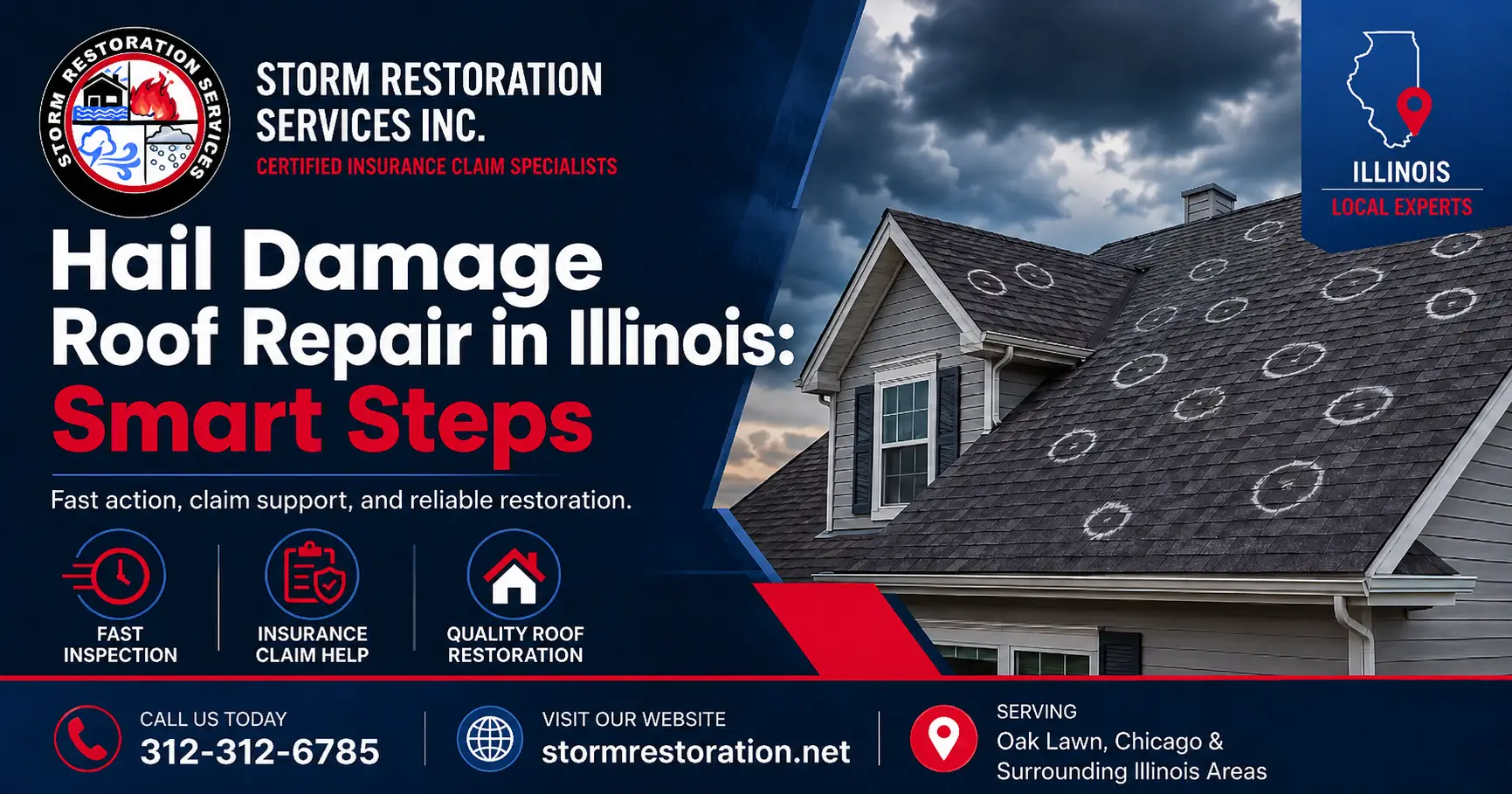
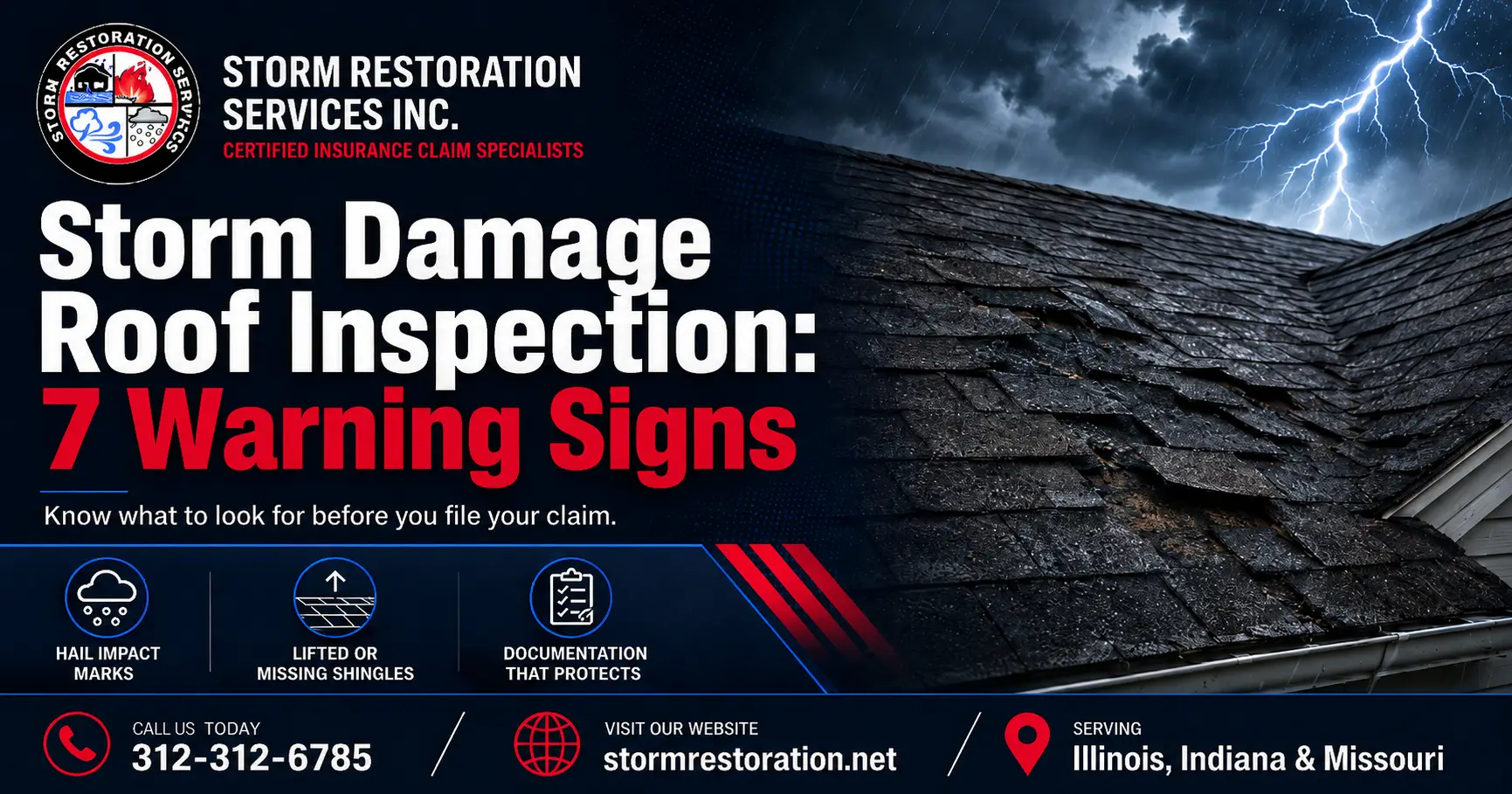
A few missing shingles can look minor from the driveway, but a storm damage roof inspection can reveal bruised shingles, lifted flashing, soft spots, and hidden leaks before they become expensive interior damage. Homeowners across Illinois, Indiana, and Missouri often call after hail, wind, or heavy rain because they are not sure what counts as real storm damage. This guide shows what to look for safely, what to document, and when to request a free inspection from a licensed, insured, and bonded restoration team.
Why this matters
Storm damage is rarely limited to the spot you notice first. In our experience, one lifted shingle can point to wider wind uplift, and one dented downspout can signal hail impact across the roof plane. That is why Storm Restoration Services starts with a damage evaluation instead of jumping straight to a repair recommendation. The risk is real and recurring, too: NOAA reports 403 U.S. billion-dollar weather and climate disasters from 1980–2024.
What to check first
Start from the ground. Look for missing shingles, curled shingle edges, granules in gutters, dented vents, loose flashing, water stains on ceilings, and damaged gutters or siding. Do not climb the roof after a storm; wet shingles and hidden decking damage make falls more likely. The NRCA recommends assessing possible roof damage from ground level and leaving closer inspection and roofing and restoration work to a professional contractor.
Insurance and documentation
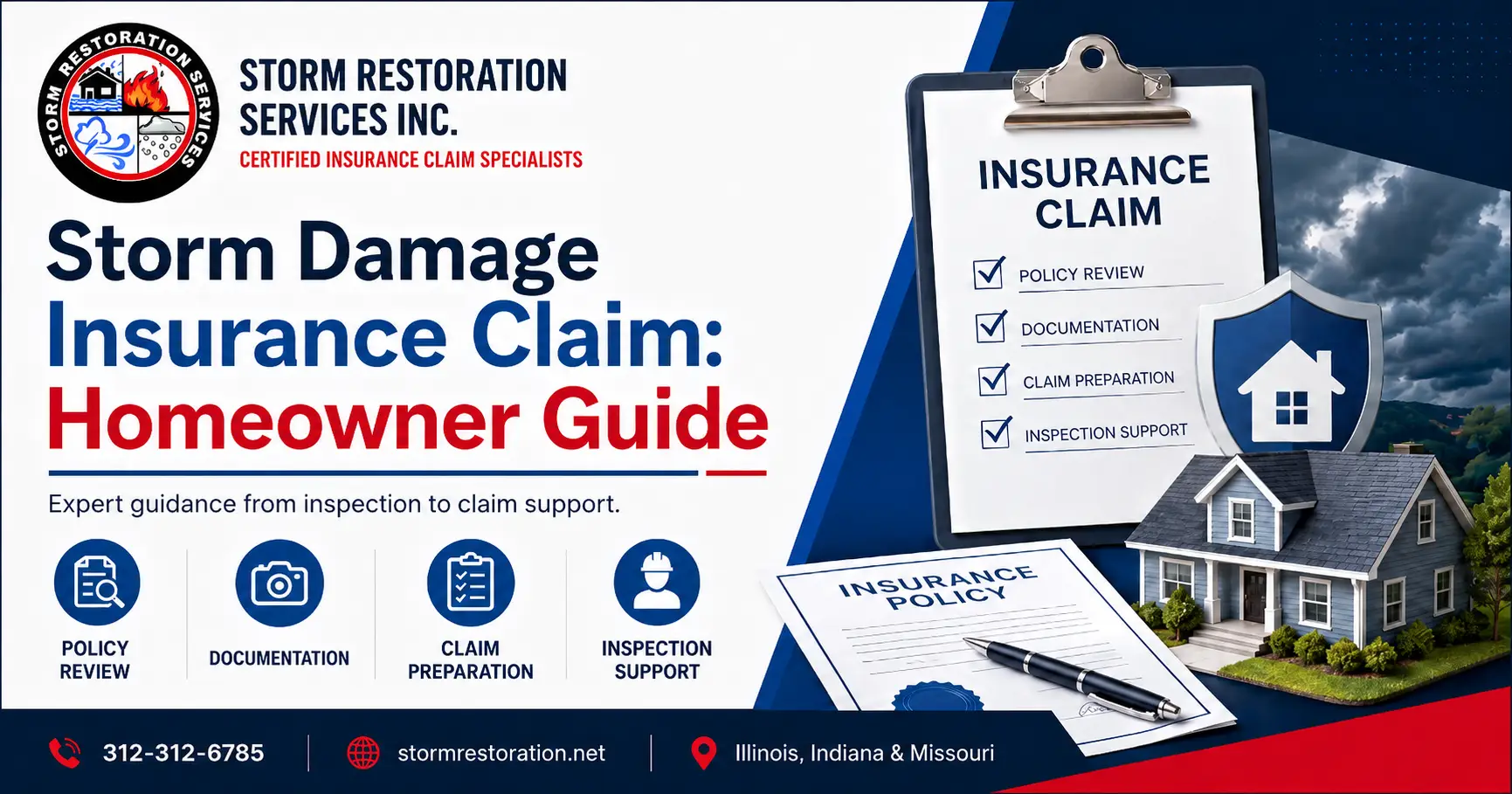
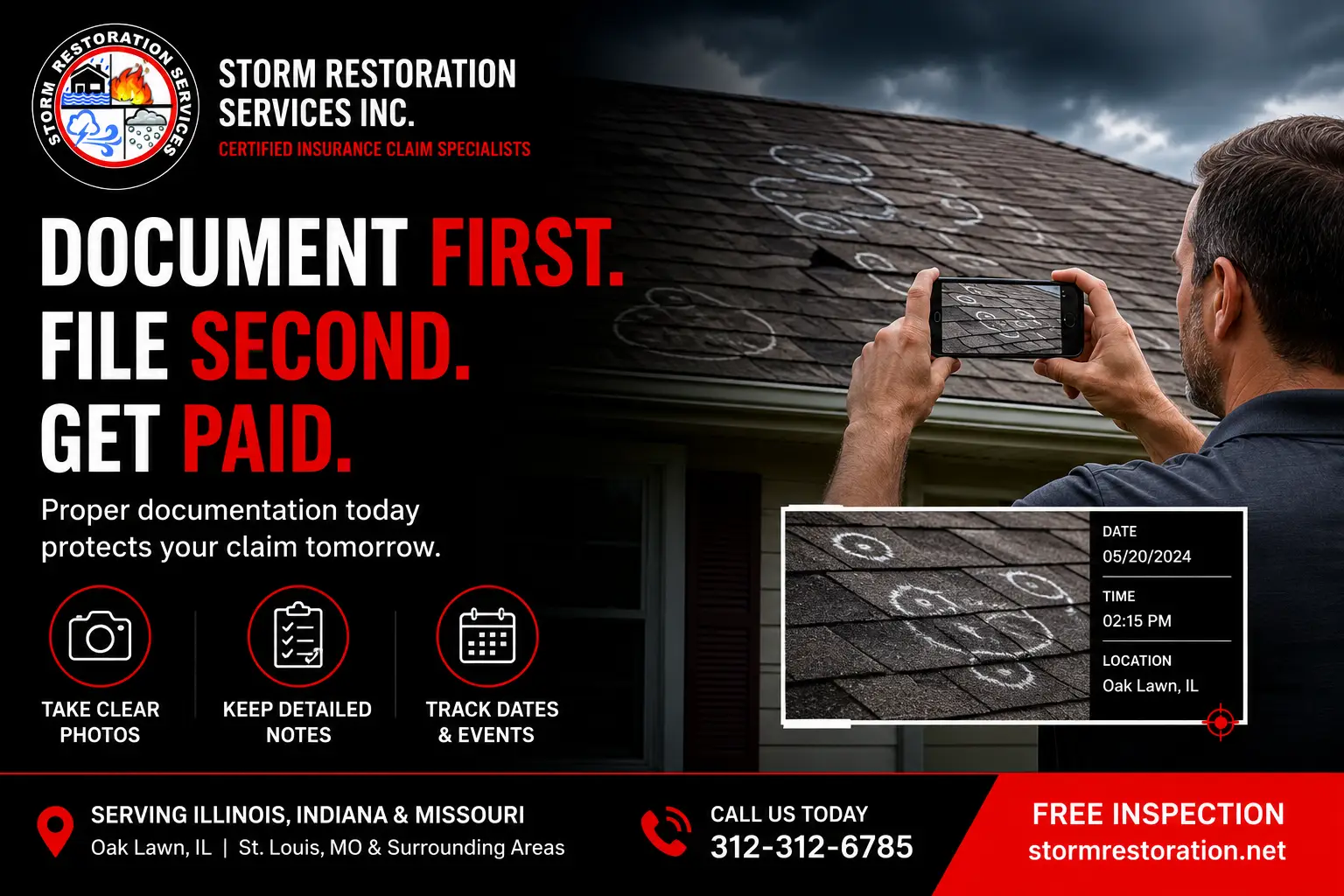
Take dated photos of visible damage, save storm alerts if you have them, and write down the date and approximate time of the storm. A certified insurance claim specialist can organize findings, review policy language, and support the insurance inspection so damage is clearly communicated. This matters because the Insurance Information Institute reports that wind and hail account for the largest share of homeowners insurance claims by frequency.
Repair decisions
Repairs should match the approved scope and the actual condition of the roof. Sometimes a targeted repair restores protection; other times widespread hail bruising or wind uplift makes replacement the better long-term path. Storm Restoration Services uses impact-resistant, hail-rated materials when appropriate for exterior storm repair — in line with FEMA guidance to re-adhere loose shingles and consider impact-resistant shingles when installing a roof in high-wind regions.
Get help
If your roof took hail, wind, or heavy rain, schedule a free inspection before small issues turn into leaks. Call 312-312-6785, email info@stormrestoration.net, or use the contact form. The team can inspect the roof, document findings, and explain next steps without pressure. Storm Restoration Services serves Illinois, Indiana, and Missouri, with offices in Oak Lawn, IL and St. Louis, MO.
Frequently Asked Questions
What is included in a storm damage roof inspection?
A storm damage roof inspection checks shingles, flashing, vents, gutters, siding, fascia, soffit, and signs of interior water entry. Storm Restoration Services also documents findings for possible insurance claim support.
How soon should I get a roof inspection after hail?
Schedule an inspection as soon as it is safe. Fast documentation helps connect visible damage to the storm event and can reduce delays in the claim process.
Can I inspect my own roof after a storm?
You can inspect from the ground, but you should not climb onto a damaged roof. NRCA recommends professional closer assessment and repairs after storm events.
Does Storm Restoration Services help with insurance claims?
Yes. The company provides insurance claim specialist services, including evaluations, policy reviews, claim preparation, inspection support, and guidance through approval.
Is a free roof inspection really free?
The website states free roof inspections and free estimates are offered. You can confirm details when you call 312-312-6785 or submit the contact form.
The safest move after severe weather is simple: document what you can see, avoid climbing the roof, and get trained eyes on the damage. For a free inspection in Illinois, Indiana, or Missouri, contact Storm Restoration Services at 312-312-6785.