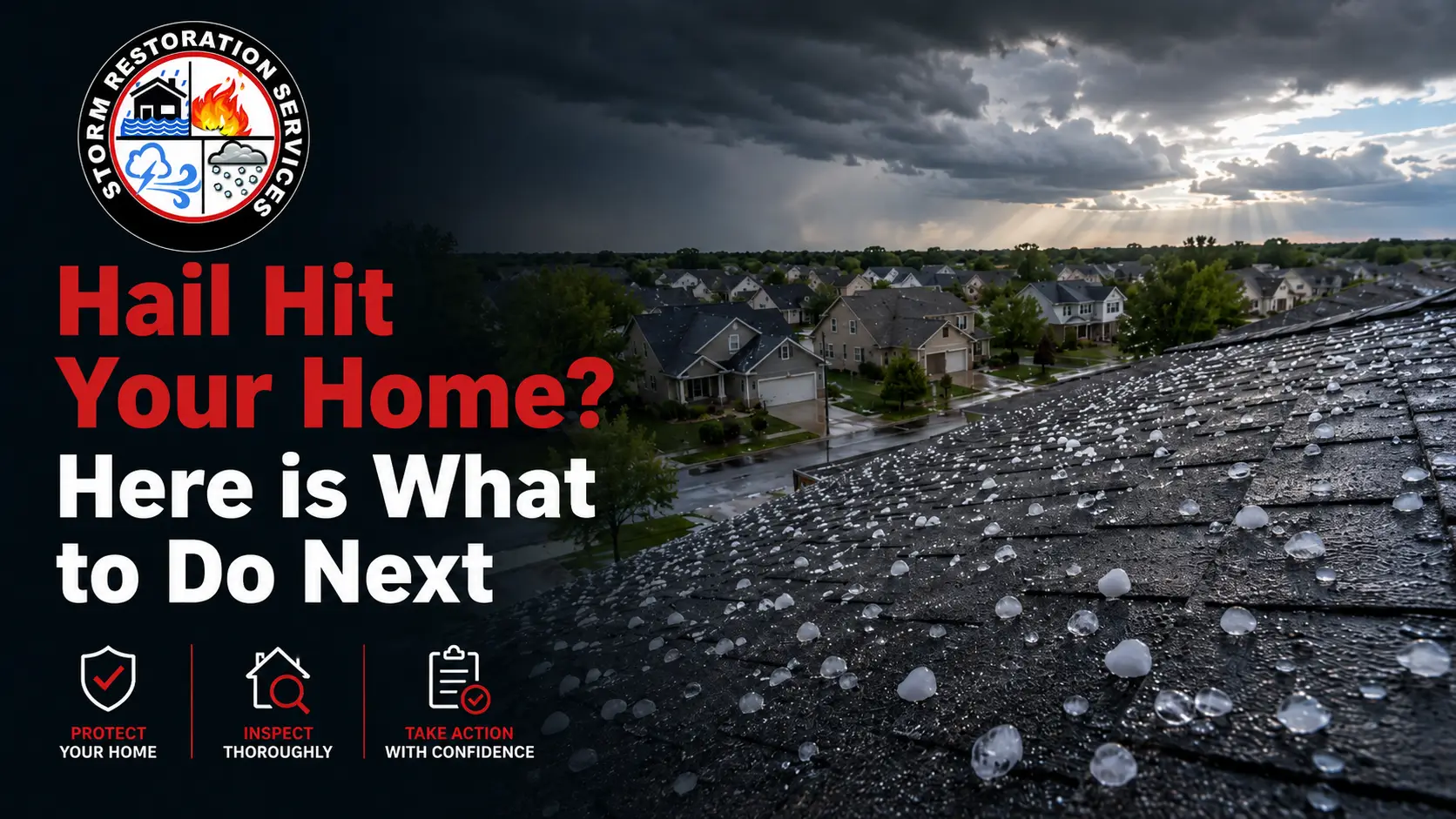
The sirens have stopped. The storm has passed. You step outside and see hailstones scattered across your driveway, some the size of quarters. Your car has fresh dents, your garden is flattened, and your neighbors are already outside inspecting their properties. The question every homeowner in Illinois, Indiana, and Missouri asks at this moment is the same: is my roof damaged, and what do I do about it? The answer is almost certainly yes, your roof took damage, and the next 72 hours determine whether you recover fully through insurance or end up paying thousands out of pocket for repairs you could have had covered. This guide gives you the exact steps to take after hail hits your home in the Midwest.
Step 1: Stay Safe and Wait for the Storm to Fully Clear
Do not go outside to inspect your property until the storm has completely passed and conditions are safe. Hailstorms in the Midwest frequently produce multiple waves of severe weather, including lightning, high winds, and occasional tornado activity. Check local weather radar and wait for the all-clear from the National Weather Service. Once it is safe, begin your inspection from the ground. Never climb onto your roof after a storm. Wet surfaces combined with damaged shingles create extremely dangerous conditions.
Step 2: Document Everything Before You Touch Anything
Grab your phone and start photographing immediately. Take photos of hailstones on the ground, including one next to a coin or ruler for size reference. Photograph your entire property exterior from multiple angles. Capture close-ups of any visible damage to siding, gutters, window screens, outdoor furniture, and vehicles. Inside, look for water stains on ceilings, walls, and around windows. Save screenshots of weather alerts and radar showing the hailstorm over your specific location. This documentation establishes the timeline and severity of the event, which is critical for your insurance claim.
Step 3: Check for Hail Damage You Can See From the Ground
While you should never climb onto your roof, there are several damage indicators visible from ground level. Look for dented or bent gutters and downspouts, which are among the most obvious signs. Check metal components like mailboxes, outdoor light fixtures, and air conditioning units for impact dents. Inspect vinyl or aluminum siding for cracks, chips, or holes. Look at window screens for tears or punctures. Examine wooden fence posts and deck railings for impact marks. If any of these show hail damage, your roof almost certainly took impacts as well, since roofing materials are more exposed and more vulnerable than most exterior components.
Step 4: Call a Certified Storm Damage Inspector
This is where professional expertise becomes essential. Hail damage on a roof is almost impossible to identify from the ground. It requires a trained inspector to walk the roof surface, feel for soft spots and bruising in the shingle mat, identify granule loss patterns, check flashing and vent damage, and assess whether the damage meets the threshold for an insurance claim. At Storm Restoration Services, our certified inspectors perform comprehensive hail damage assessments that cover your entire exterior, not just the roof. We serve homeowners across Illinois, Indiana, and Missouri, including the Chicago suburbs, Northwest Indiana, and the St. Louis metro area. The inspection is free and comes with no obligation.
Step 5: Do Not Call Your Insurance Company Until After the Inspection
This step contradicts what most people assume, but it is critically important. If you call your insurance company before having a professional inspection, you will file the claim without complete information about the extent of damage. The insurance company will send their own adjuster, who works for them, not for you. Without your own documentation to compare against the adjuster’s findings, you risk an incomplete or underpaid claim. Get your inspection first. Then file with full documentation, a professional damage report, and an expert ready to attend the adjuster meeting with you. For a complete walkthrough of the claim process, read our full guide on the storm damage insurance claim process.
Why Hail Damage Gets Worse Over Time
Hail does not just dent your roof. It compromises the protective granule layer on asphalt shingles, creating weak points that deteriorate with every subsequent rain, freeze, and UV exposure cycle. A shingle that looks merely bruised today can crack and leak within six months. Exposed fiberglass mat oxidizes and becomes brittle. Hairline fractures widen with temperature changes. Damaged flashing seals fail and allow water intrusion. The longer you wait, the more secondary damage accumulates, and insurance companies can argue that secondary damage was caused by neglect rather than the original hailstorm. Filing promptly with proper documentation protects your coverage.
Beyond the Roof: Exterior Components That Hail Damages
A comprehensive hail damage claim should include all affected exterior components, not just the roof. Gutters absorb direct hail impacts that dent, bend, and compromise their ability to direct water away from your foundation. Siding, whether vinyl, aluminum, or wood, cracks and punctures under hail impact, creating entry points for moisture. Fascia boards behind the gutters can split or crack. Soffit panels underneath your roof overhang can sustain punctures that compromise attic ventilation. All of these components are typically covered under your homeowner’s insurance policy when damaged by hail. Storm Restoration Servicess inspects and documents every exterior component, ensuring your claim captures the full scope of damage.
Midwest Hail: Why Illinois, Indiana, and Missouri Are High-Risk
The Midwest sits in one of the most hail-prone regions in the United States. Illinois, Indiana, and Missouri each experience dozens of significant hailstorms annually, with peak season running from April through August. The Chicagoland area, Northwest Indiana lake-effect zones, and the St. Louis metro corridor are particularly vulnerable due to the collision of warm Gulf moisture with cooler northern air masses. Older housing stock in many Midwest neighborhoods means roofing materials may already be near the end of their lifespan, making them even more susceptible to hail damage. If you live in any of these regions and have experienced a hailstorm in the past 12 months, getting a professional inspection is not optional, it is essential.
Take Action Within 72 Hours
The first 72 hours after a hailstorm are your window for the strongest possible claim. Documentation is fresh, damage has not been compounded by subsequent weather, and your insurance timeline starts cleanly. Storm Restoration Servicess provides free hail damage inspections across Illinois, Indiana, and Missouri. Our certified claim specialists will assess your entire property, document all findings, and support you through every step of the insurance process.
Schedule your FREE storm damage inspection today. Visit stormrestoration.net
Certified Storm Damage & Insurance Claim Specialists.
Serving Illinois | Indiana | Missouri
Oak Lawn, IL | St. Louis, MO