A storm just tore through your neighborhood. You can see missing shingles, dented gutters, and debris scattered across your yard. Inside, a water stain is already forming on the ceiling. The damage is real, but the question that stops most homeowners in their tracks is simple: what do I do now? The storm damage insurance claim process does not have to be confusing, stressful, or adversarial. When you understand each step and have the right team supporting you, the process moves from overwhelming to manageable. This guide walks you through every phase, from the first inspection to the final restoration, so you know exactly what to expect and how to protect your interests.
Why the Order of Steps Matters More Than You Think
Most homeowners make their first mistake within hours of a storm: they call their insurance company before doing anything else. While this seems logical, it actually puts you at a disadvantage. The insurance company will send an adjuster whose job is to assess damage on behalf of the carrier, not on your behalf. Without your own professional documentation to compare against the adjuster’s findings, you are relying entirely on someone whose financial incentive is to minimize the payout. The correct order is to document, inspect professionally, then file. This sequence gives you leverage, evidence, and expert support before the insurance company’s process begins.
Step 1: Document Everything Immediately After the Storm
Before you touch anything, clean anything, or move anything, document the damage. Use your smartphone to take photos and videos of every area of visible damage. Capture wide shots of your roof from the ground, showing missing or displaced shingles. Photograph dented gutters, cracked siding, damaged fascia and soffit, broken windows, and any debris on your property. Inside, photograph water stains on ceilings and walls, bubbling paint, and any standing water. Create a written log noting the date and time of the storm, a description of each damaged area, and the approximate timeline of when you discovered each issue. Save weather alerts, radar images, and local news reports confirming severe weather in your area. This documentation becomes the foundation of your insurance claim.
What Most Homeowners Forget to Document
Damage to air conditioning units, fence panels, outdoor furniture, vehicles, and landscaping often gets overlooked but strengthens your claim by demonstrating the severity of the storm event. If hail dented your car, it almost certainly damaged your roof. Photograph everything, even if it seems minor.
Step 2: Call a Certified Storm Damage Inspector Before Calling Insurance
This is the most important step in the entire process. A certified storm damage inspector will perform a thorough assessment of your roof, gutters, siding, fascia, soffit, and interior for storm-related damage. Unlike a general contractor, a certified inspector understands insurance industry standards for documentation, scope of work, and damage classification. At Storm Restoration Servicess, our inspectors are certified claim specialists who know exactly what insurance adjusters look for. We document every finding with professional-grade photos, measurements, and detailed reports that meet insurance carrier requirements. This inspection is completely free, with no obligation. The documentation we produce becomes your most powerful tool when the adjuster arrives.
Step 3: File Your Insurance Claim With Proper Support
Once your inspection is complete, contact your insurance company to file the claim. Have the following information ready: your policy number, the date of the storm event, your inspector’s documentation package, your own photos and written log, and saved weather reports for your area. Request a claim number and ask about the timeline for an adjuster visit. At Storm Restoration Servicess, we guide homeowners through this call, ensuring you provide the right information without accidentally saying anything that could harm your claim. Our insurance claim specialists understand carrier communication and can help you navigate the process with confidence.
Step 4: The Adjuster Visit — Have Your Expert Present
When the insurance adjuster arrives, this is the make-or-break moment of your claim. The adjuster will inspect your property and create their own damage assessment. This is where having your own certified inspector present makes a critical difference. Your inspector can walk the property alongside the adjuster, pointing out damage that might be overlooked. They can compare their professional documentation against the adjuster’s findings in real time. They can ensure the scope of work includes all damaged areas including gutters, siding, fascia, and soffit, not just the roof. They can advocate for accurate measurements, proper material specifications, and complete documentation. Storm Restoration Servicess attends every adjuster meeting with our clients at no additional cost. Our presence consistently results in more complete and accurate claim approvals.
What Happens When the Adjuster Misses Damage
If the adjuster’s report is incomplete or undervalues the damage, your contractor can file a supplement. A supplement is a formal request to the insurance company to reconsider specific items with additional evidence and documentation. This is standard practice in the industry and is one of the primary reasons having a certified claim specialist on your side matters.
Step 5: Review Your Claim Approval and Begin Restoration
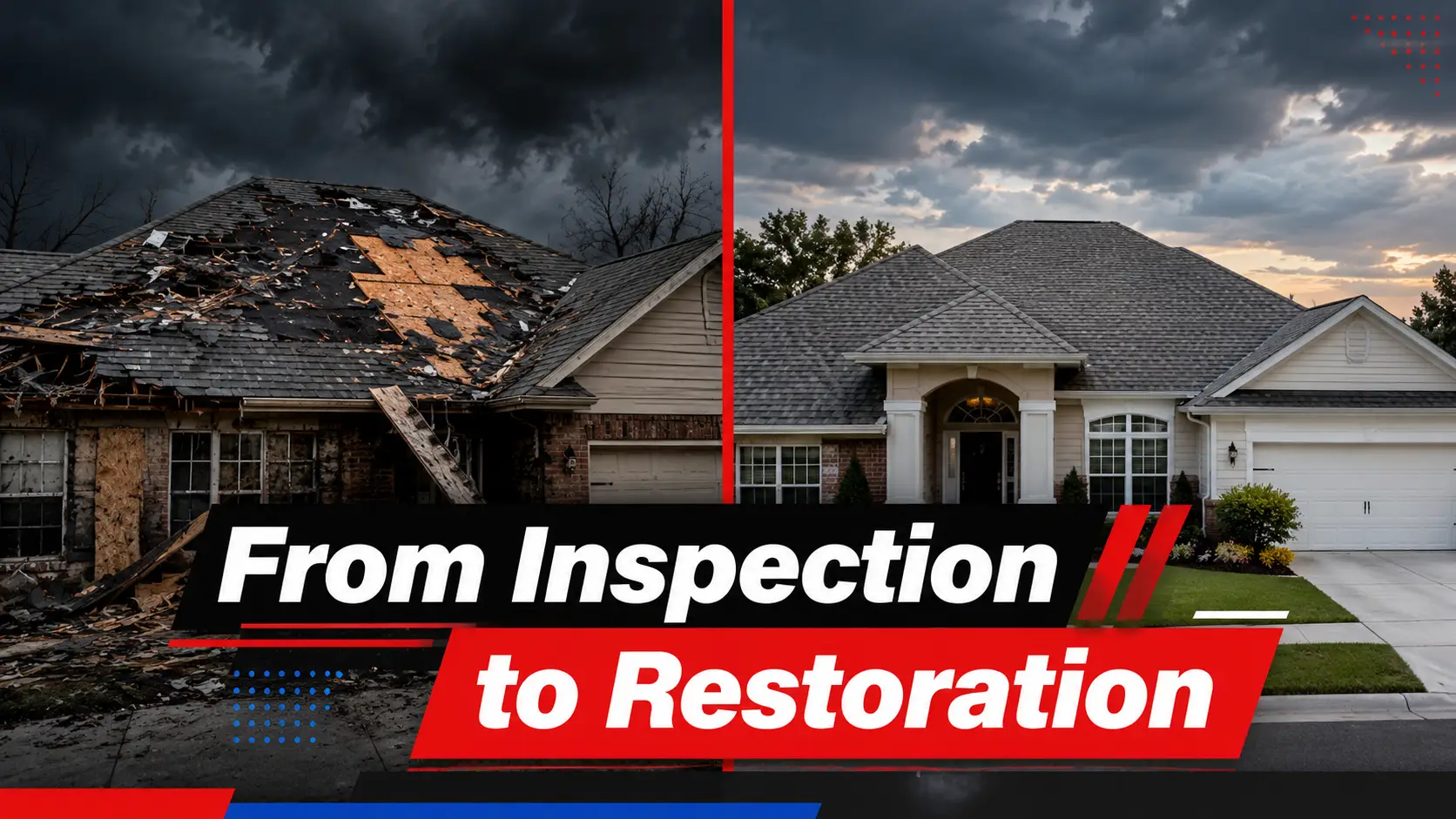
After the adjuster submits their report, your insurance company issues a determination. If the claim is approved, you will receive a payment based on the adjuster’s scope minus your deductible. Review this approval carefully with your restoration contractor. Ensure all damage is accounted for, including exterior components like gutters, siding, fascia, and soffit that are often undervalued or excluded. If items are missing, your contractor files a supplement with additional documentation. Once you are satisfied with the scope and approval amount, restoration begins. At Storm Restoration Servicess, our licensed crews use certified, impact-resistant materials to restore your home to better-than-before condition. We handle the entire project from start to finish, including any supplemental claims that arise during the work.
Common Reasons Storm Damage Claims Get Denied
Understanding why claims get denied helps you avoid these pitfalls. The most common reasons include waiting too long to file, allowing damage to worsen beyond the original storm event. Inadequate documentation that fails to clearly link damage to the specific storm. Pre-existing damage that the homeowner did not address before the storm. Failure to mitigate further damage after the storm, such as not tarping an exposed roof. Policy exclusions or lapsed coverage. Working with an unlicensed or uninsured contractor whose work does not meet insurance requirements. Each of these is avoidable when you follow the correct process and work with certified professionals from the beginning.
How Long Does the Entire Process Take?
The timeline varies depending on your insurance carrier, the complexity of damage, and local demand for contractors. A typical timeline looks like this: free inspection and documentation takes one to two days. Filing the claim and scheduling the adjuster takes one to two weeks. The adjuster visit and determination takes one to three weeks. Restoration work takes one to five days for most residential properties. The total process from storm event to completed restoration typically ranges from four to eight weeks. During storm season, when carrier response times slow due to high claim volume, working with an experienced team helps keep your claim moving forward.
Protect Your Home and Your Claim Today
If your home has been through any severe weather event in the past 12 months, the clock is ticking on your claim window. Most policies allow one to two years for filing, but waiting makes damage worse and claims harder to prove. Storm Restoration Servicess offers free, no-obligation storm damage inspections for homeowners across Illinois, Indiana, and Missouri. Our certified claim specialists will assess your property, document all damage, and guide you through every step of the insurance process.
Schedule your FREE storm damage inspection today. Visit stormrestoration.net
Certified Storm Damage & Insurance Claim Specialists.
Serving Illinois | Indiana | Missouri
Oak Lawn, IL | St. Louis, MO